A pinguecula is a benign growth on the white of the eye, and one of the findings most commonly confused with a pterygium. The two look similar at first glance and both are linked to sun exposure — but medically they are distinct conditions, with different implications for vision and for treatment.
What is a pinguecula?
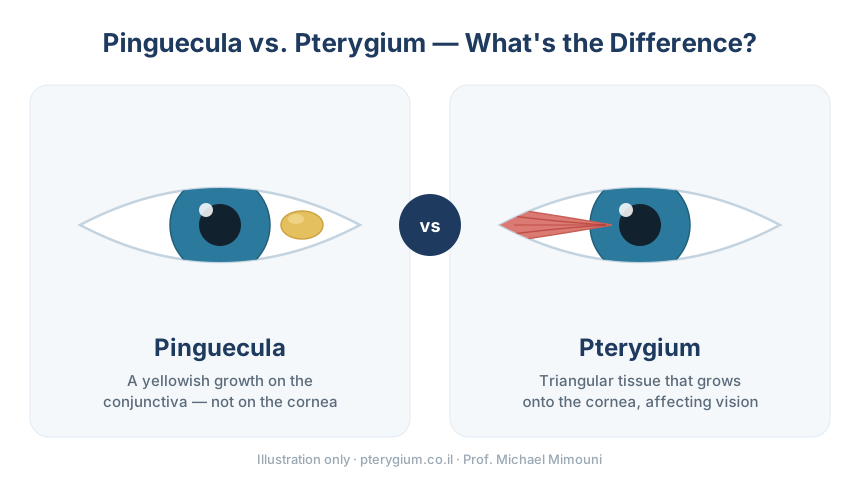
A pinguecula is a localised accumulation of tissue on the conjunctiva, the membrane covering the white of the eye. It usually appears as a slightly raised yellowish bump or patch, most often on the side nearest the nose and sometimes on the outer side. The yellowish change reflects alterations in the connective tissue of the conjunctiva following cumulative exposure to ultraviolet light, wind and dust.
The key difference from a pterygium
The most important distinction comes down to a single question: does the tissue cross onto the cornea? A pinguecula stays on the conjunctiva and does not encroach on the cornea. A pterygium, by contrast, advances onto the cornea — the transparent window at the front of the eye — and can therefore distort its curvature, cause astigmatism and affect vision. This is the difference that explains why a pterygium is considered for surgery more often.
Symptoms
In many cases a pinguecula causes no symptoms at all and is found incidentally. When symptoms do occur they usually include dryness, irritation, local redness and a foreign-body sensation. Occasionally the tissue can become inflamed, red and more swollen — a state called pingueculitis — typically after exposure to sun, wind or dust.
Causes
The risk factors resemble those for a pterygium: cumulative UV exposure is the principal one, alongside wind, dust, smoke and dry air. Pinguecula is therefore more common among people who spend many hours outdoors and in hot, sunny climates.
Diagnosis
Diagnosis is made by an ophthalmologist using a slit lamp. This examination establishes clearly whether the tissue remains on the conjunctiva or crosses onto the cornea — the distinction that determines whether it is a pinguecula or a pterygium, and that guides the treatment recommendation.
Treatment
In most cases treatment is conservative and aimed at relieving symptoms: lubricating drops for dryness and irritation, and protection from the sun with UV-filtering sunglasses. During episodes of inflammation, anti-inflammatory drops may be used for a short period on a doctor’s instruction. Surgical removal is considered in cases of persistent irritation that does not respond to treatment, recurrent inflammation, or significant cosmetic concern.
When to be examined
It is worth seeing an ophthalmologist when a new growth appears on the white of the eye, when an existing growth changes in size or colour, when redness or irritation persists, and of course when there is any change in vision. An examination distinguishes a pinguecula from a pterygium and allows any progression to be monitored.
Frequently asked questions
What is the difference between a pinguecula and a pterygium?
Does a pinguecula turn into a pterygium?
Is a pinguecula dangerous?
How is a pinguecula treated?
Does a pinguecula need surgery?
Have a question about pterygium? Want a specialist’s opinion?